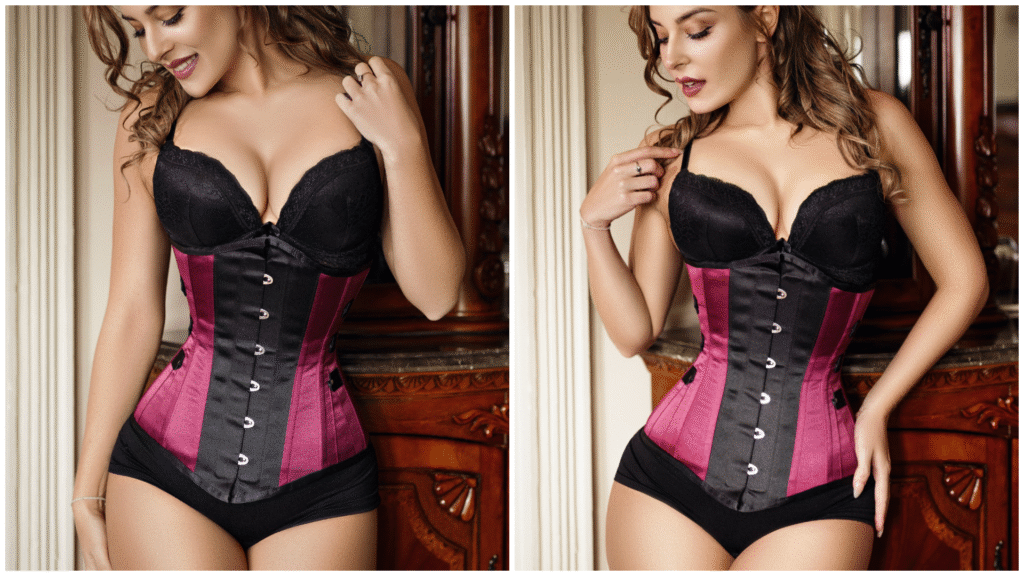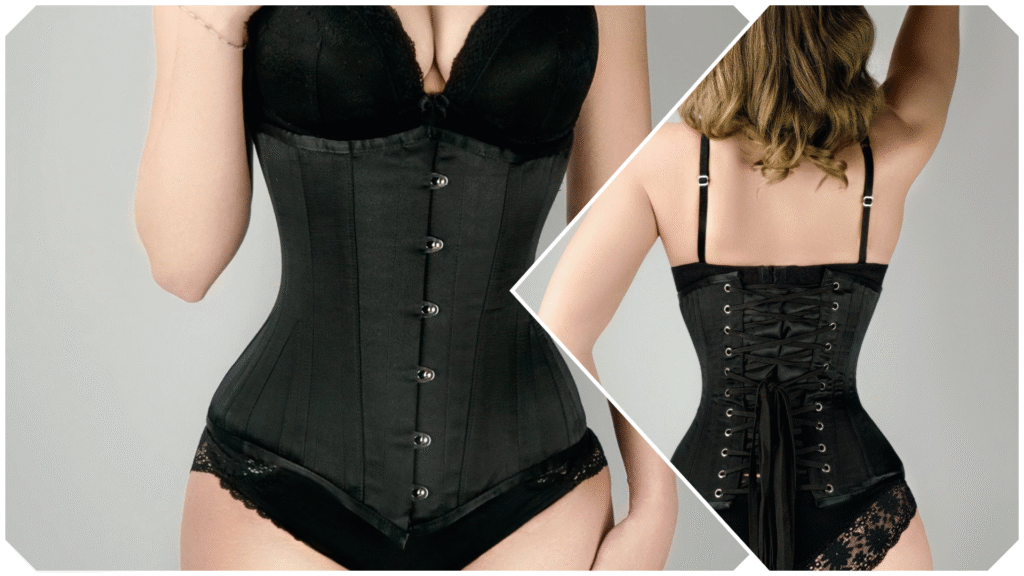



In recent years, corsetry has seen a renewed surge in popularity—thanks to body-shaping enthusiasts, vintage revivalists, and fashion influencers. Waist Training vs. Tight Lacing are usually mentioned side by side, but they are actually distinct practices with distinct goals, techniques, and effects. If you ever thought about how these two differed, then this comprehensive guide will enlighten you to each practice and help you choose the one which is best suited to your lifestyle.
Understanding Waist Training
Waist training is the process of wearing a steel boned waist trainer or corset consistently to gradually reduce your natural waistline over time. It’s not a quick-fix approach but a long-term commitment that involves discipline and consistency.
The main goal of waist training is to reform the waist into an even more defined hourglass silhouette. Those who waist train generally wear their corset for a number of hours every day—usually between six and ten hours—with the plan to gradually train their body to take on the new shape. In contrast to shapewear that provides temporary outcomes, waist training can actually lead to more permanent results when practiced with a balanced diet, good posture routines, and gentle exercise.
A best waist trainer for women utilized for this reason will usually have spiral steel bones, a solid busk closure, and a rigid fabric frame designed for everyday use. The corsets should fit snugly but not constrictively around the midsection without hindering breathing or movement. Gradual progression and comfort are key aspects of this process.
Waist training is usually advised for newbies as it is less severe compared to tight lacing. It enables the wearer to learn how to use corsets, develop lacing skills, and gradually increase tolerance over time.


What is Tight Lacing?
Tight lacing, also known as “extreme corseting,” is a more intense and advanced type of corset wear. Tight lacing’s purpose is to create extreme and instantaneous waist reduction, sometimes lacing the corset down to being multiple inches smaller than the natural waist. In contrast to waist training, which involves gradual increments, tight lacing is all about creating an immediately apparent hourglass figure.
This practice demands a stronger corset construction. Tight lacing corsets are usually bespoke or reinforced with additional steel boning and heavy-duty material to support the intense pressure involved. It’s not unusual for tight lacers to drop their waist by four to six inches or more in a single session.
But tight lacing is not suitable for everyone. It puts more strain on the body and should only be tried by seasoned corset wearers. The wearer has to be careful about their physical comfort and not over-tighten, because incorrect lacing can lead to bruising, constricted breathing, or internal discomfort.
Tight lacing is particularly prevalent in fashion, fetish clothing, cosplay, and historical reenactment. It produces a sleek, dramatic silhouette, but it’s not designed for prolonged daily wear without serious breaks and recovery time.
Key Differences Between Waist Training and Tight Lacing
The greatest distinction resides in the level of intensity and the objective of each practice. Waist training is a daily routine intended to bring about small and possibly long-term body shaping effects. It emphasizes health, comfort, and regular use over weeks or months.
In contrast, tight lacing is more of a quest for instant aesthetic effect. It is aesthetics-driven and is only applied for brief duration in select occasions, events, performances, or photographs. Tight lacing can build a smaller waist within minutes, but the effects are usually temporary and do not help to reduce waist size over time unless done repeatedly—and even so, with higher risks.
Waist training is a more lenient introduction to the realm of corsets top also. It provides sufficient give for daily activities, such as sitting, walking, or light exercise. Tight lacing must be done with caution, accurate sizing, and a solid grasp of corset mechanics.
In addition, the kind of corsets employed is varied. Waist training corsets are designed to be comfortable and to last, typically worn under clothing all day. Tight lacing corsets, however, are constructed to withstand strength and force, with stiffened seams, additional boning, and a tighter construction.


Which Practice is Best for You?
Your decision should be based on your goals, experience level, and lifestyle. If you’re just starting your corset journey or looking to enhance your posture, waist training is the ideal starting point. It allows your body time to adjust to compression and offers slow, safe progress toward a more sculpted waistline.
If you’re experienced with corsets and understand how your body responds to compression, tight lacing may be an exciting way to create dramatic curves for short durations. However, it’s crucial to approach tight lacing with respect for your body and a clear understanding of the risks involved.
Neither practice should hurt or harm. Following your body is critical in both exercises. Right lacing, proper fitting, and quality materials are essential to success and safety as well.
Final Thoughts
Waist Training vs. Tight Lacing can appear the same upon initial observation, but they have distinct purposes and commitments. Waist training is long-term body shaping through everyday wear and cumulative results, so it is best for beginners or those wanting daily benefits such as posture correction and gentle waist reduction. Tight lacing is for experienced corset wearers who desire quick, dramatic curves, usually for special events or self-expression.